
Quick Summary: In 2026, custom software development will focus on AI-driven workflows, cloud-native and hybrid architectures, security-by-design, and edge computing. Teams will use AI agents to speed up development, while flexible cloud setups support growth and resilience. Security will be integrated from the start, and edge computing will improve real-time, low-latency applications.
In 2026, teams building custom apps must decide what to automate, where apps should run, and how much control the business needs before scale. That makes planning hard. AI, cloud, and security now move faster than old roadmaps, but every build still must prove value. This guide ranks the top Custom Software Trends and Software Development Trends shaping Software Development 2026, so you can judge Custom Software Trends by speed, quality, security, scale, and business value.
Quick Comparison
| Trend | Best for | Primary impact | Key decision factor |
|---|---|---|---|
| Agentic AI in the SDLC | Teams trying to accelerate delivery without scaling headcount too quickly | Faster development cycles and changing engineering workflows | |
| Cloud-native and hybrid architectures | Organizations building for growth, resilience, and flexibility | Scalable infrastructure and easier deployment | |
| Security-first custom software | Regulated businesses and any team handling sensitive data | Lower cyber risk and stronger trust | |
| Edge computing for low-latency apps | Real-time, distributed, or field-based software use cases | Lower latency and better local resilience |
What to know about Custom Software Development Trends
Custom Software Trends in 2026 show how fast business software is changing. AI-assisted builds, cloud-first delivery, tighter security, and flexible system design now shape what companies buy and build. These shifts matter because software choices affect speed, cost, and long-term risk.
For SMBs, Custom Software Trends are no longer just about adding features. They now shape uptime, compliance, customer trust, and how quickly teams can adapt. The businesses that track Custom Software Trends early can make smarter bets and avoid costly rebuilds later.
1. Agentic AI in the SDLC
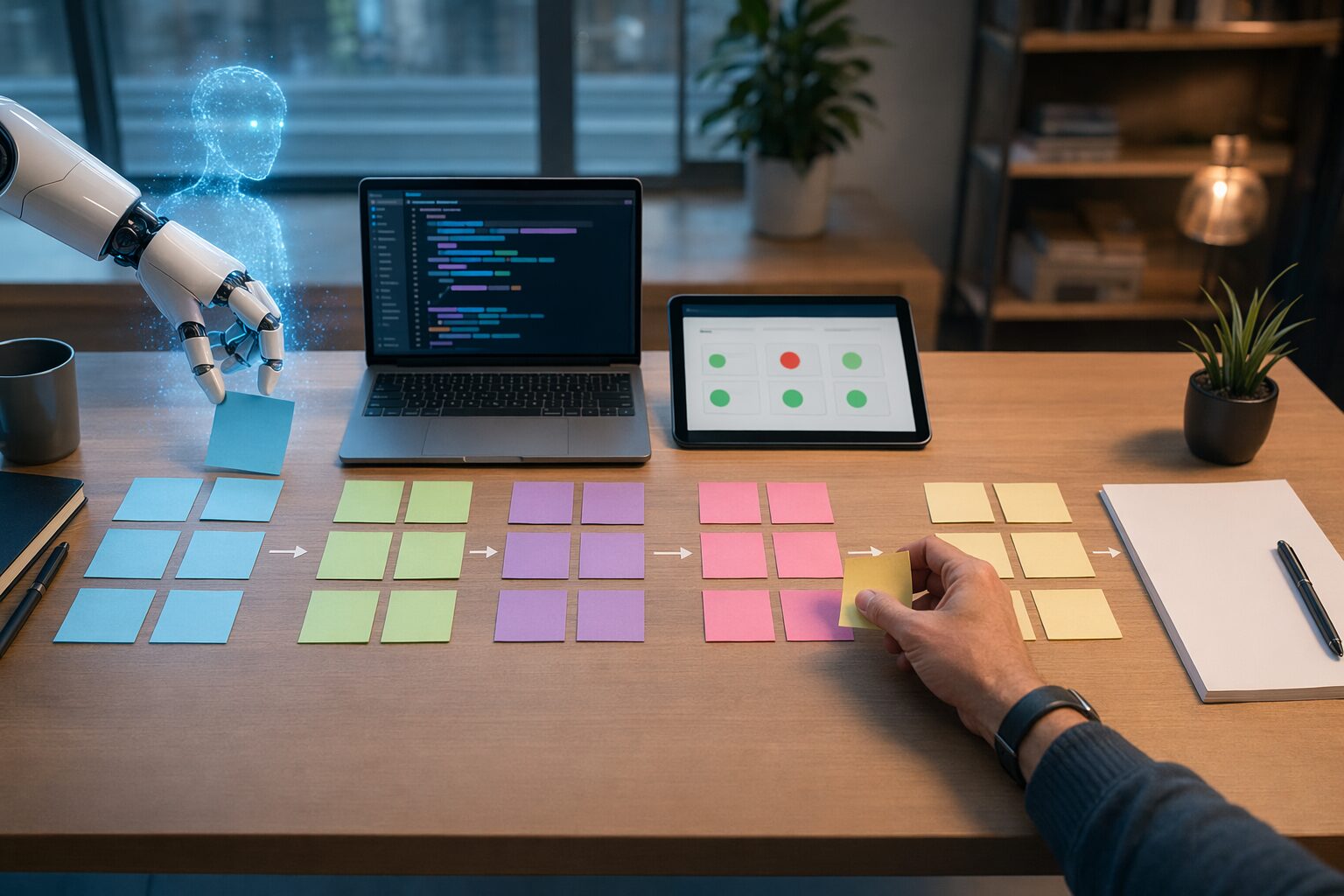
AI agents now do more than suggest code. They help plan, test, document, and move work across delivery. Recent research shows 57% of organizations already use agents in multi-stage workflows, while Anthropic says 2026 is the shift from assistance to workflow collaboration across the SDLC.
Highlights
- Speeds up coding, testing, documentation, and review.
- Shifts developers toward orchestration and oversight.
- Helps smaller teams ship faster, but raises QA and governance risk.
Last updated: July 2, 2026
2. Cloud-native and hybrid architectures
Cloud-native software in 2026 is not just about moving apps to one cloud. Teams now place workloads across cloud, on-prem, and edge for speed, control, and compliance, with CNCF reporting Kubernetes in production for 82% of container users.

Highlights
- Elastic scaling and faster releases
- Better fit for DevOps and distributed teams
- Stronger support for regulated or low-latency workloads
Specs
- Best for: Organizations building for growth, resilience, and flexibility
- Primary impact: Scalable infrastructure and easier deployment
- Implementation focus: Platform choice, environment design, and ops planning
- Risk level: Medium – hybrid setups need strong governance and network design
Pros
- Easier scaling and portability
- Simpler updates over time
Cons
- Costs can rise without guardrails
- Bad migrations add complexity
It ranks high because these choices lock in performance, security, and total cost for years.
Last updated: July 2, 2026
3. Security-first custom software
Security now starts in design, not after launch. In 2026, secure custom software means access control, privacy, and monitoring from day one, as CISA’s Secure by Design guidance recommends, while OWASP Top 10:2025 still flags broken access control as a top app risk.
Highlights
- Builds in authentication, authorization, and least-privilege access
- Cuts breach risk and supports audits
Specs
- Best for: Regulated businesses and teams handling sensitive data
- Primary impact: Lower cyber risk and stronger trust
- Risk level: Low early, high when bolted on later
It ranks third because weak security can sink every other software trend.
Last updated: July 2, 2026
4. Edge computing for low-latency apps
More custom apps now process data closer to users, devices, and job sites. That matters when a central cloud is too slow or too far away. RFC 9556 notes edge fits time-sensitive, privacy, and intermittent-connectivity needs, while NIST ties it to low-latency distributed processing.
Highlights
- Faster response for real-time apps
- Better offline and location-aware workflows
- Stronger data locality for regional rules
Specs
- Best for: Real-time, distributed, or field-based software
- Primary impact: Lower latency and better local resilience
- Implementation focus: Deployment topology and data placement
- Risk level: Medium
Pros
- Better performance far from a central server
- Handles weak or intermittent connectivity
- More control over where data is processed
Cons
- Harder to build and run than centralized apps
- Needs careful monitoring across many environments
It ranks fourth because the impact is high, but only for use cases where latency and locality truly drive results.
Last updated: July 2, 2026
Honourable Mentions
A few nearby shifts still matter, even if they are not leading the 2026 roadmap. Keep these on your watch list:
- Composability and API-first design – key for legacy upgrades and tool integration.
- Low-code acceleration with pro-code guardrails – fast delivery still needs expert oversight.
- FinOps and software cost governance – architecture choices now shape cloud and AI spend.
How to choose the right custom software trend to prioritize
Pick the trend that solves your next business problem, not the one getting the most hype.
- Match trend to outcome – choose for speed, security, scale, compliance, or user experience first.
- Back overloaded teams – start with agentic AI and automation if staff time is your main limit. Add strong QA and clear rules.
- Build for growth early – use cloud-native or hybrid architecture before piling on features.
- Protect sensitive data – make security-first engineering a must from day one.
- Support mobile or field users – assess edge and low-latency design early.
- Keep future options open – favor composable, API-first systems to avoid rebuilds later.
Need custom software that keeps up with 2026 trends without adding delivery risk? Talk to SR Technical Consultants for secure planning, custom development, and managed IT support built for growth.
Frequently Asked Questions
Q1: What are the key emerging trends in custom software development for 2026?
Teams are focusing on AI-assisted builds, agentic workflows, cloud-native apps, edge processing, stronger secure-by-design practices, and faster low-code support for internal tools. The shift is toward software that ships faster, adapts quickly, and lowers risk.
Q2: How will AI-driven automation and agentic AI impact software engineering in 2026?
AI will speed up testing, code review, ticket triage, and support tasks. Agentic AI can handle multi-step work, but teams still need clear rules, human review, and strong security checks to avoid errors, data leaks, and weak output.
Q3: What role will cloud-native architectures and edge computing play in future software solutions?
Cloud-native design helps teams scale, update, and recover faster. Edge computing cuts delay by processing data closer to users or devices. Together, they support real-time apps, smart operations, and better uptime across distributed business systems.